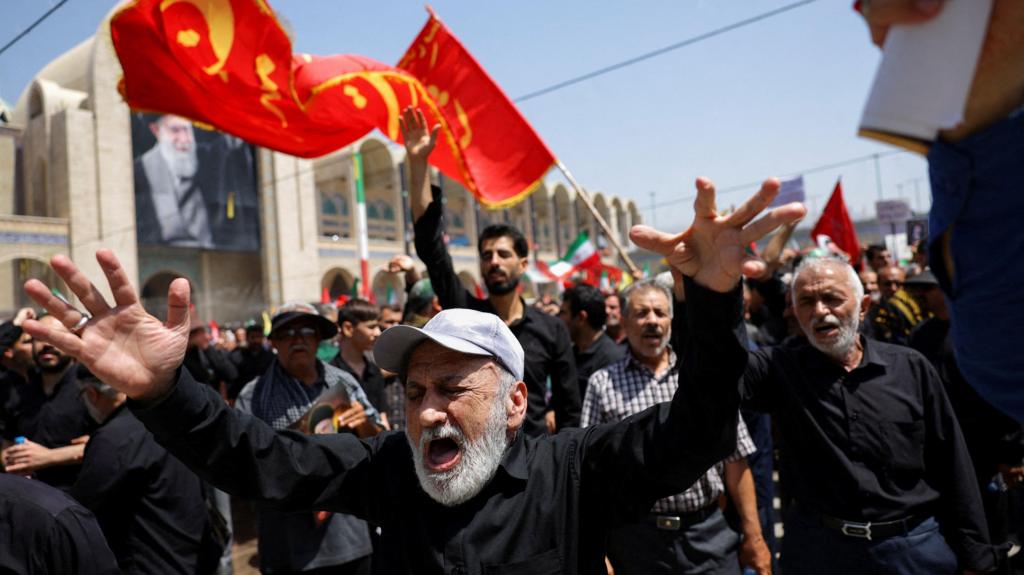
Large crowds gathered in Tehran as Iran began a six-day funeral for Supreme Leader Ayatollah Ali Khamenei, who was killed in an Israeli airstrike in February. The ceremonies mark a significant moment for the Islamic Republic, as this is the first time Iran has buried a Supreme Leader since the death of Ayatollah Ruhollah Khomeini, the founder of the Islamic Republic, whose 1989 funeral drew massive crowds and descended into chaos.
The funeral began on Saturday in Tehran, where Khamenei's body lies in state at the Grand Mosalla until Monday before traveling across Iran and then into Iraq. The procession will pass through the Iraqi Shia cities of Karbala and Najaf at the request of Iraqi politicians, reflecting Khamenei's religious significance for Shia Muslims. The funeral is expected to conclude with his burial in Mashhad on Thursday.
Mohammad Reza Aref, Iran's first vice-president and lead funeral organizer, described the ceremony as "the most important event of this century" and predicted it would be the most attended event since the 1979 revolution. Millions of mourners are expected to participate in Tehran alone, with additional crowds anticipated as the procession moves through other cities.
The funeral represents a major display of state power and national resilience. Iranian officials are framing the ceremonies as an act of defiance against American pressure, using the event to project messages of resistance to the world.
A notable absence has sparked questions about Iran's power structure. Mojtaba Khamenei, the son of the deceased leader and his reported successor, has not appeared publicly since March. According to sources, Mojtaba was severely injured in the same airstrike that killed his father. The attack also claimed the lives of Mojtaba's wife and 14-month-old daughter. The extent of his injuries remains unknown, though he has issued written statements. Israel's defense minister this week threatened to target Mojtaba, claiming he was "marked for death."
The lack of public appearances by the younger Khamenei has allowed open divisions among Iranian leaders to surface, even as they present a united front during the funeral. Political observers have raised questions about who is actually running the country during this period of transition and whether Mojtaba will attend any portion of the multi-day ceremonies.
Iranian authorities are likely hoping to avoid the scenes of mass grief that overwhelmed security forces at Khomeini's 1989 funeral, when mourners attempted to touch the body and caused his shroud to fall away during the procession. Officials aim to demonstrate the regime's ability to maintain control and mobilize large crowds while managing the transition to new leadership.