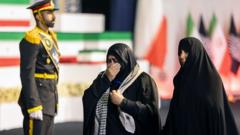
Iran has started a six-day funeral ceremony for Supreme Leader Ali Khamenei, who was killed in coordinated U.S. and Israeli strikes in February. His body is lying in state at Tehran's Grand Mosalla beginning Friday, with the funeral expected to draw millions of people across the country.
The funeral, which begins Saturday in Tehran and concludes Thursday with Khamenei's burial in Mashhad, represents a major national event. Mohammad Reza Aref, Iran's first vice-president and the lead funeral organizer, described it as "the most important event of this century" and potentially the most attended gathering since Iran's 1979 revolution.
The scale of the funeral carries political and religious significance. Iran is using the ceremonies to demonstrate national resilience and continuity following the loss of its supreme leader. At the request of Iraqi politicians, Khamenei's body will also be transported through the Shia cities of Karbala and Najaf in Iraq, extending the funeral's regional reach.
The funeral comes at a sensitive moment for Iran. American officials had expressed concern that Israeli strikes targeting other Iranian leaders, such as Foreign Minister Abbas Araghchi or Parliament Speaker Mohammad Ghalibaf, could have disrupted ongoing diplomatic negotiations. Khamenei's death has reshaped regional dynamics and U.S.-Iran relations.
Khamenei's successor is his son, Mojtaba Khamenei, but the younger Khamenei is not expected to appear at his father's funeral. Mojtaba was severely injured in the same U.S.-Israeli strike that killed his father and also resulted in the deaths of Mojtaba's wife and 14-month-old daughter. The extent of his injuries remains unclear, though he has issued written statements. One statement distanced himself from ceasefire negotiations while allowing them to continue. Israel's defense minister threatened Mojtaba this week, claiming he was marked for death.
The multiday funeral serves as both a moment of national grieving and a political statement by Iran's leadership. The elaborate ceremonies underscore Khamenei's decades-long central role in the Islamic Republic and the government's determination to project stability and strength despite the leadership transition.
The funeral represents an effort by Iranian officials to display national unity and social cohesion at a time when the country faces complex diplomatic and military challenges. The scale and duration of the ceremonies reflect Khamenei's importance to Iran's political system and the theocracy's commitment to demonstrating continuity during this period of transition.