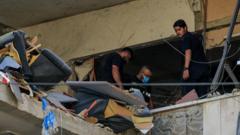
Israel launched airstrikes on the southern suburbs of Beirut on Sunday, striking what the military described as "terrorist headquarters" in response to rocket fire from Hezbollah. The attacks represent a serious escalation in the conflict in Lebanon, occurring just days after a ceasefire was established in mid-April.
Israeli forces said they intercepted Hezbollah rocket fire targeting northern Israel on Sunday morning before conducting the retaliatory strikes. The bombardment hit two separate apartment buildings in the Hezbollah stronghold, killing two people and wounding 11 according to initial reports. The strikes scattered rubble across streets and prompted residents to flee the area amid fears of further attacks.
The renewed violence threatens to destabilize diplomatic efforts to contain the conflict. Hezbollah had recently rejected a ceasefire proposal that the Lebanese government and Israel had agreed to, insisting on conditions that include Israeli troop withdrawal from Lebanon and an end to Israeli strikes across the country. The armed group is not participating in ongoing negotiations between the Lebanese government and Israel taking place in Washington.
Iran has responded with strong threats of retaliation. Ebrahim Rezaei, spokesperson for the Iranian parliament's foreign policy committee, stated the country would deliver a "decisive and painful response" to the Israeli strike. Mohammad Bagher Ghalibaf, the speaker of Iran's parliament, declared that US bases and assets in the region had become "legitimate targets," accusing Israel and the United States of being uncommitted to dialogue and only understanding "the language of power."
The strikes on Beirut come after Israel issued forced evacuation orders for the city of Tyre and conducted extensive airstrikes across southern Lebanon. Israeli forces have also continued operations around Nabatieh and other areas in the south, with fighting concentrated near Zawtar al-Sharqiya after Israel captured Beaufort Castle. The military has also carried out strikes in Gaza, where a previously brokered truce continues to deteriorate, killing at least nine people on Sunday.
The wider conflict began on March 2 when Hezbollah launched rockets at Israel following the killing of Iran's supreme leader. Israeli strikes have since killed more than 3,613 people in Lebanon, while Hezbollah has killed at least 30 Israeli soldiers in Lebanon and three Israeli civilians.
US efforts to establish stability in the region appear to have stalled. President Trump stated he was not demanding that Lebanon be included in broader negotiations with Iran, though he claimed an agreement was near. Israeli media reported that the United States was informed before Sunday's strike, despite Washington previously asking Israel not to target Beirut. Israeli officials anticipate a limited response from Iran and Hezbollah, with citizens bracing for possible attacks.