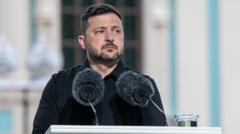
Ukrainian President Volodymyr Zelensky has written an open letter directly to Russian President Vladimir Putin, calling for face-to-face negotiations to end the ongoing conflict. The letter marks the first time Zelensky has publicly addressed Putin in writing since Russia's full-scale invasion began in 2022, and represents a significant diplomatic gesture toward direct engagement between the two leaders.
In the letter, Zelensky argues that only direct talks between Ukraine and Russia can resolve the war. He contends that while Ukrainian resilience remains strong, most Russians have grown weary of the conflict and are ready for peace. The proposal suggests holding talks in a neutral third country.
The timing of Zelensky's initiative coincides with shifting diplomatic priorities in Washington. With the United States focusing its efforts on Iran rather than Ukraine, Kyiv appears to be taking a more independent approach to seeking resolution directly with Moscow, rather than relying primarily on Western mediation.
The Kremlin has not yet publicly responded to Zelensky's proposal. Previous high-level negotiations between Ukrainian and Russian leaders have achieved limited results, with both sides maintaining fundamentally incompatible positions on territorial control and security guarantees.
Any potential meeting would represent the most significant direct diplomatic contact between the two leaders since the war began. However, analysts say a breakthrough remains unlikely given current circumstances. Both armies show signs of exhaustion while sustaining heavy casualties, and the conflict continues to devastate Ukraine's energy infrastructure through ongoing strikes.
The prospects for productive talks face substantial obstacles. The Kremlin continues to demand that Ukraine withdraw its troops from the Donbas region as a precondition for negotiations. Ukraine has flatly rejected any suggestion that it unilaterally withdraw from its own territory, a position strengthened by recent battlefield dynamics in which Russian advances have largely stalled.
Germany's defence minister, Boris Pistorius, expressed skepticism about Putin's apparent interest in peace discussions. He suggested the Russian leader may be using peace rhetoric as a strategic deception, noting that if Putin genuinely wanted to end the conflict, he could do so himself rather than setting conditions. Pistorius characterized such statements as part of Putin's broader hybrid war strategy aimed at diverting attention from Russian weaknesses.
A US-brokered ceasefire is set to expire, and Moscow has rejected extending the truce. Meanwhile, European Union leaders have sought to secure a role in any future substantive peace negotiations, insisting that Ukraine must remain involved in all discussions and decisions about its own future.
Success in any talks would depend on whether both leaders prove willing to make significant concessions on core issues including territorial control, security arrangements, and Ukraine's international alignment. Given the heavy investments both sides have made in military operations and their opposing positions, the path forward remains highly uncertain.