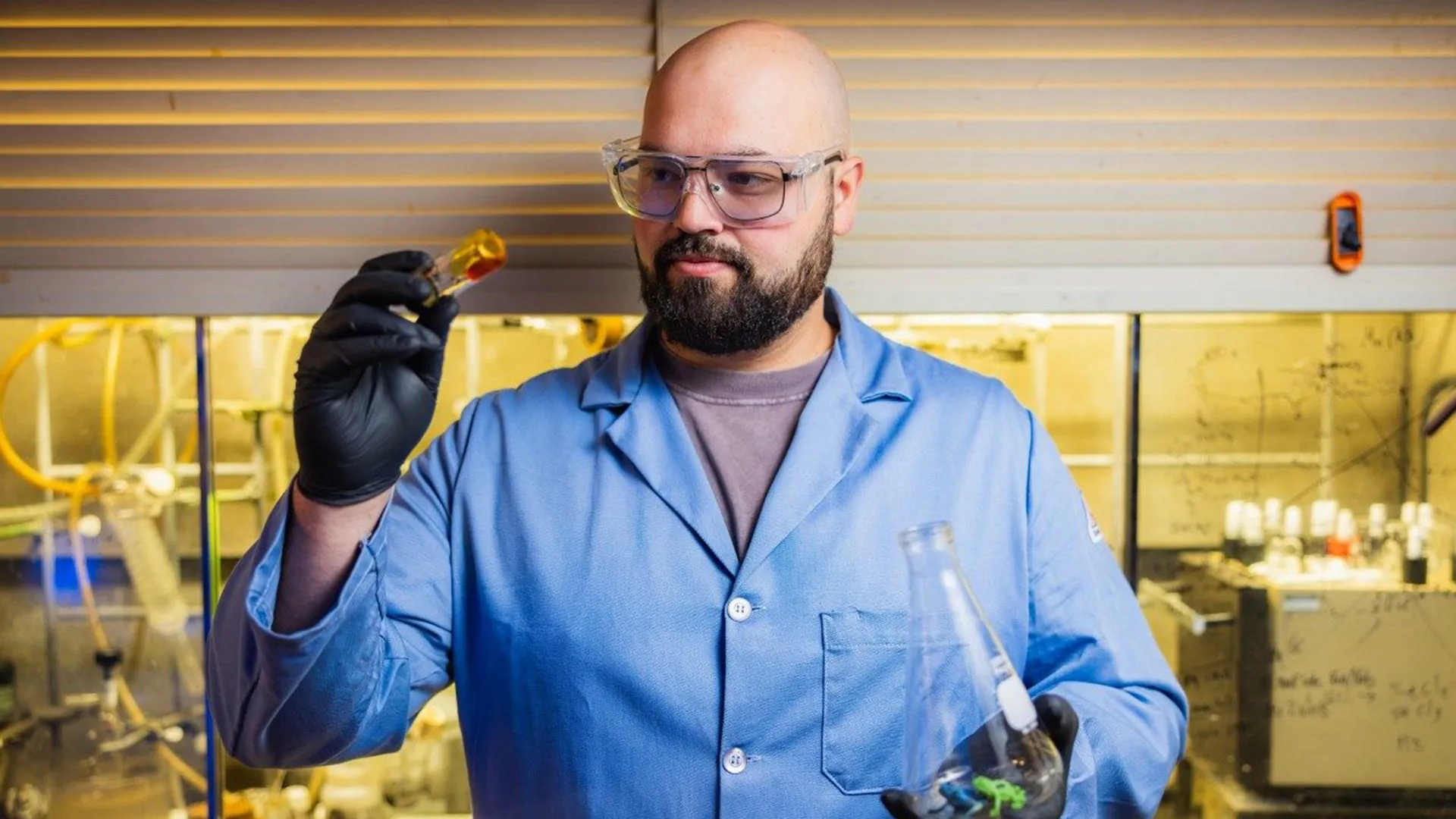
Researchers at Virginia Tech have developed a chemical process that turns discarded polyvinyl chloride, or PVC, into an ingredient used in high-performance synthetic engine oils. The team, led by chemist and chemical engineer Guoliang Liu, described the work in the journal Nature. The laboratory research offers a possible way to give difficult plastic waste a useful second life while providing an alternative source of material for industrial lubricants.
PVC is used in plumbing pipes, window frames and credit cards, but its chlorine content makes it difficult to recycle. Manufacturers also add chemicals to make PVC products flexible, rigid or resistant to heat, further complicating recycling. Much of the discarded material ends up in landfills. The researchers converted it into polyalphaolefin, a type of synthetic base oil valued for its stability and performance across a broad range of temperatures.
The process begins by placing PVC in a solvent, then adding aluminum trichloride and alpha-olefins, hydrocarbons used to manufacture synthetic lubricants. The researchers heat the mixture to 158 degrees Fahrenheit for three hours before extracting a relatively thick lubricating oil. Such base oils form the foundation of high-performance synthetic engine oils. Lubricants reduce friction and wear between moving parts, helping machinery operate efficiently and last longer, from lawn mowers and cars to jet engines.
The finding followed unsuccessful attempts to change the chemical groups attached to PVC’s long molecular chains. Those experiments produced soft, sticky materials with little practical use. Liu then shifted the approach toward breaking the chains into smaller pieces. Graduate researcher Eric Munyaneza Nuwayo led the project, working with fellow graduate researchers Connor Thompson and Abby Civiello. The work built on earlier studies from Liu’s laboratory that converted other plastic waste into substances used in soaps and detergents.
Collaborators examined both the resulting oil and the prospects for producing it. Researchers at Texas A&M University evaluated its performance, while work at the California Institute of Technology investigated the chemistry through calculations. Virginia Tech researcher Xi Chen developed economic and manufacturing models to explore larger-scale production. The research demonstrated a laboratory route from discarded PVC to lubricant material, but expanding production beyond the laboratory remains a further step. Liu also hopes to improve the process’s environmental sustainability.