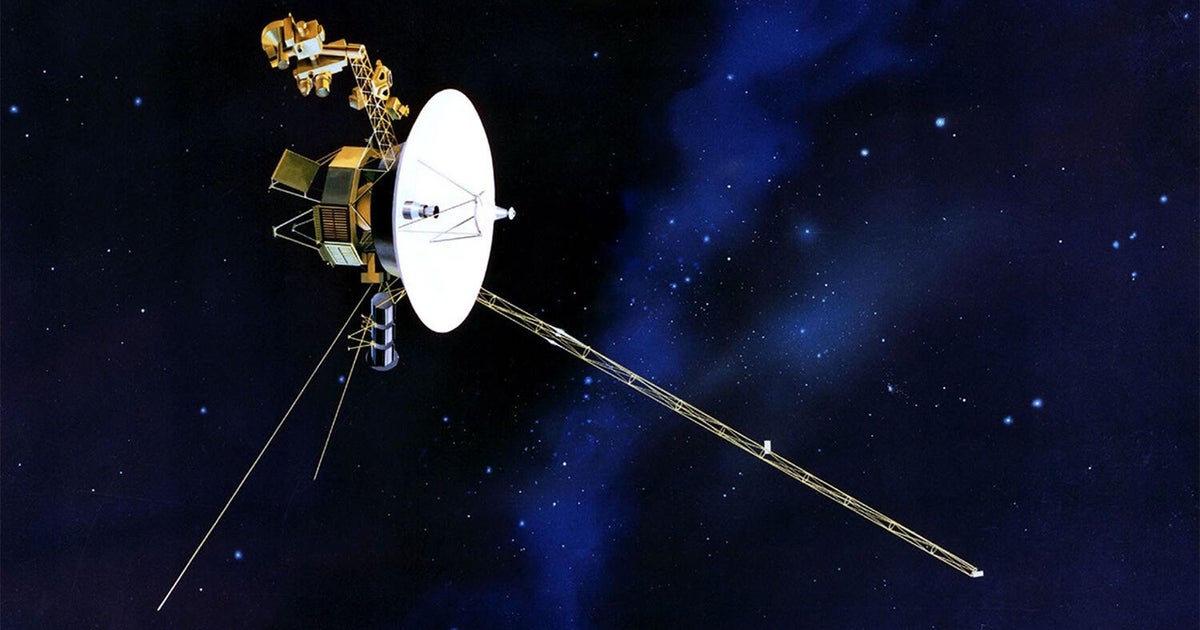
NASA's Voyager 1 spacecraft reached a distance of one light-day from Earth early Wednesday, more than 16 billion miles away, marking the farthest any human artifact has ventured from the planet. Launched in 1977 to study Jupiter and Saturn, the probe sailed past the milestone traveling at nearly 38,000 miles per hour. Radio signals from the spacecraft now take 24 hours to reach flight controllers at NASA's Jet Propulsion Laboratory, meaning the 13-member team had to wait until Thursday to confirm the achievement.
Voyager 1 and its sister ship Voyager 2, which followed a different path through the outer planets before entering interstellar space in 2018, continue to transmit data about magnetic fields, charged particles, and plasma waves beyond the solar system. Both spacecraft are powered by radioisotope thermoelectric generators using decaying plutonium 238. Voyager 1 now operates on just over 210 watts, down from 470 watts at launch, enough to run only two of its 10 instruments. Voyager 2 has slightly more power at about 230 watts, allowing three instruments to remain active.
Mission manager Kareem Badaruddin, one of three full-time team members maintaining the aging spacecraft, described the mission as one of the greatest human achievements. The team carefully manages remaining power and heat to prevent fuel lines from freezing and to keep the spacecraft antennas pointed toward Earth. With commands taking two full days for a round-trip response, troubleshooting problems has become a slow process.
Engineers hope to keep data flowing for several more years as power steadily declines, though it remains uncertain how long the spacecraft will function. After power is exhausted, both Voyagers will continue drifting through space, expected to remain intact for a billion years or more. Each carries a gold phonograph record encoded with greetings in 55 languages, 115 photographs, natural sounds, and music from multiple cultures as a message for any civilization that might encounter them in the distant future.