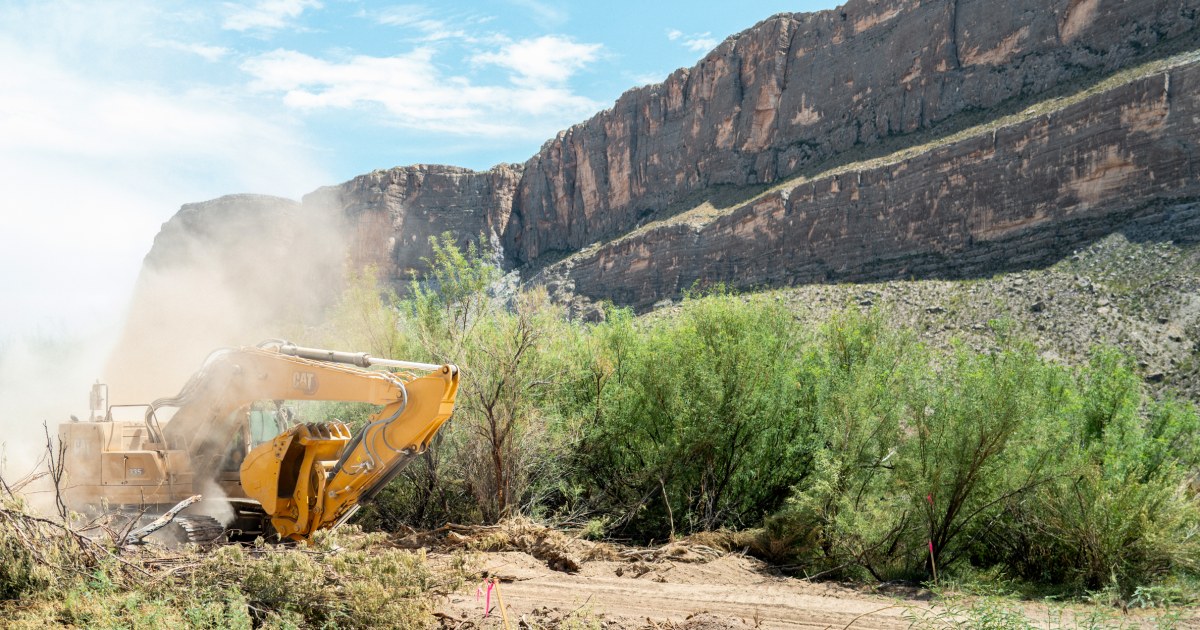
The Supreme Court ruled 8-1 on Monday to allow the Trump administration to proceed with border wall construction in the Big Bend region of southwest Texas, lifting a lower court injunction that had halted the project. The court found that the federal judge who blocked construction lacked authority to do so and said the administration was extremely likely to prevail on that issue. Justice Ketanji Brown Jackson was the lone dissenter.
The dispute centers on three waivers issued by Homeland Security secretaries Kristi Noem and Markwayne Mullin between February and July that allow the government to bypass environmental and conservation laws for the project. The planned construction covers 341 miles in the sparsely populated area along the Rio Grande, including parts of Big Bend National Park. The administration said 89,000 people have been detained attempting to cross there in recent years.
District Judge Kathleen Cardone had invalidated the waivers in October, ruling that the Homeland Security secretary lacked such broad powers under a 1996 law. The administration argued that Congress granted it wide authority to build border infrastructure without regulatory delays. The Supreme Court said the government has compelling interests when border security policies are challenged.
The case was brought by the Center for Biological Diversity, Friends of the Ruidosa Church, and a local property owner who argued construction would permanently damage the landscape and threaten historic and cultural sites. They contended the Big Bend area has the lowest migrant apprehension rates along the southern border, making the waivers inappropriate. Government data confirms Big Bend has the fewest encounters between federal agents and migrants of any border section. The administration has said completing the wall there is necessary to prevent the area from becoming an entry point if other sections are built.