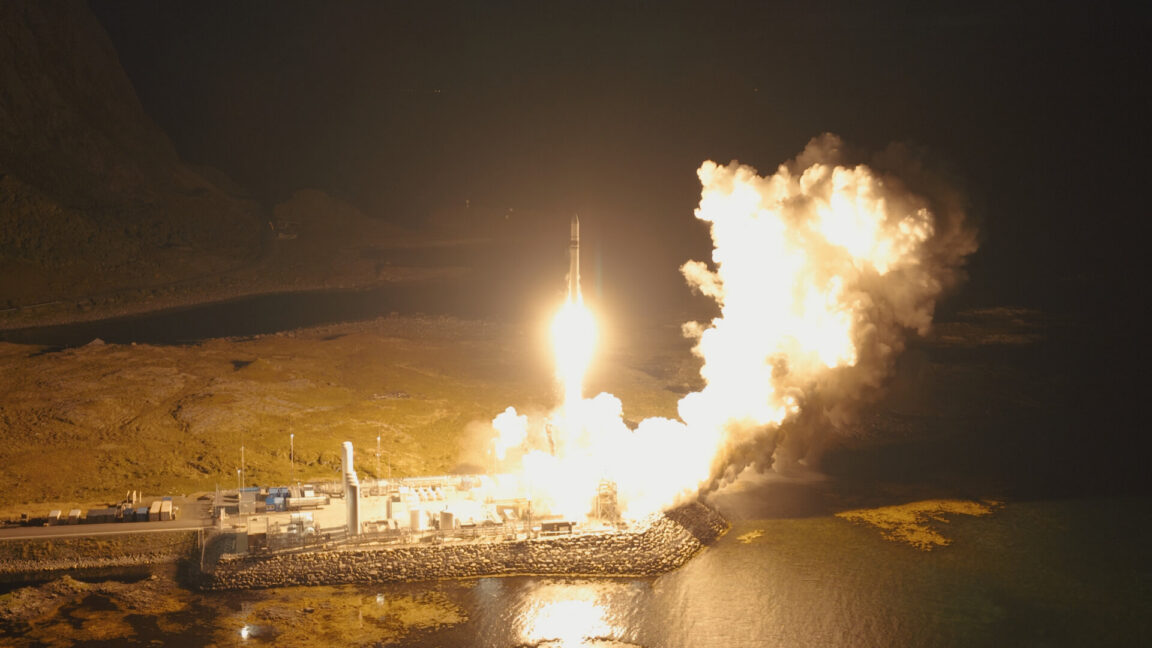
Isar Aerospace successfully launched its Spectrum rocket into orbit Saturday from a spaceport in northern Norway, becoming the first fully commercial launch vehicle in Europe to reach orbit. The 92-foot-tall rocket lifted off at 4:12 pm EST from Andøya Spaceport inside the Arctic Circle and reached orbit seven minutes later, carrying five small satellites and a technology experiment.
Founded in 2018 by three students at the Technical University of Munich, Isar raised roughly $1 billion through private financing over eight years and now employs nearly 500 people. The company's CEO, Daniel Metzler, said the launch opens sovereign access to space for Europe and provides an alternative to relying on foreign launch providers. The success marks the largest German rocket in history and the first built predominantly in Germany to reach orbit.
The launch holds geopolitical significance as European governments seek strategic autonomy in space amid difficult relations with the United States. Europe currently must either pay a premium to launch satellites on European rockets or turn to SpaceX, which is politically unpalatable for some officials. The Spectrum rocket can place up to one metric ton of payload into low-Earth orbit, filling a gap between smaller launchers and Europe's heavier Vega-C rocket.
Saturday's flight followed a failed first test in March 2025, when the rocket spun out of control and crashed less than 20 seconds after liftoff due to a vent valve malfunction. The European Space Agency awarded Isar $230 million last month through its European Launcher Challenge program, which aims to foster commercial competition in Europe's launch market. Several other European startups are targeting orbital launch attempts by the end of the year, but Isar now leads the field after demonstrating its capability.