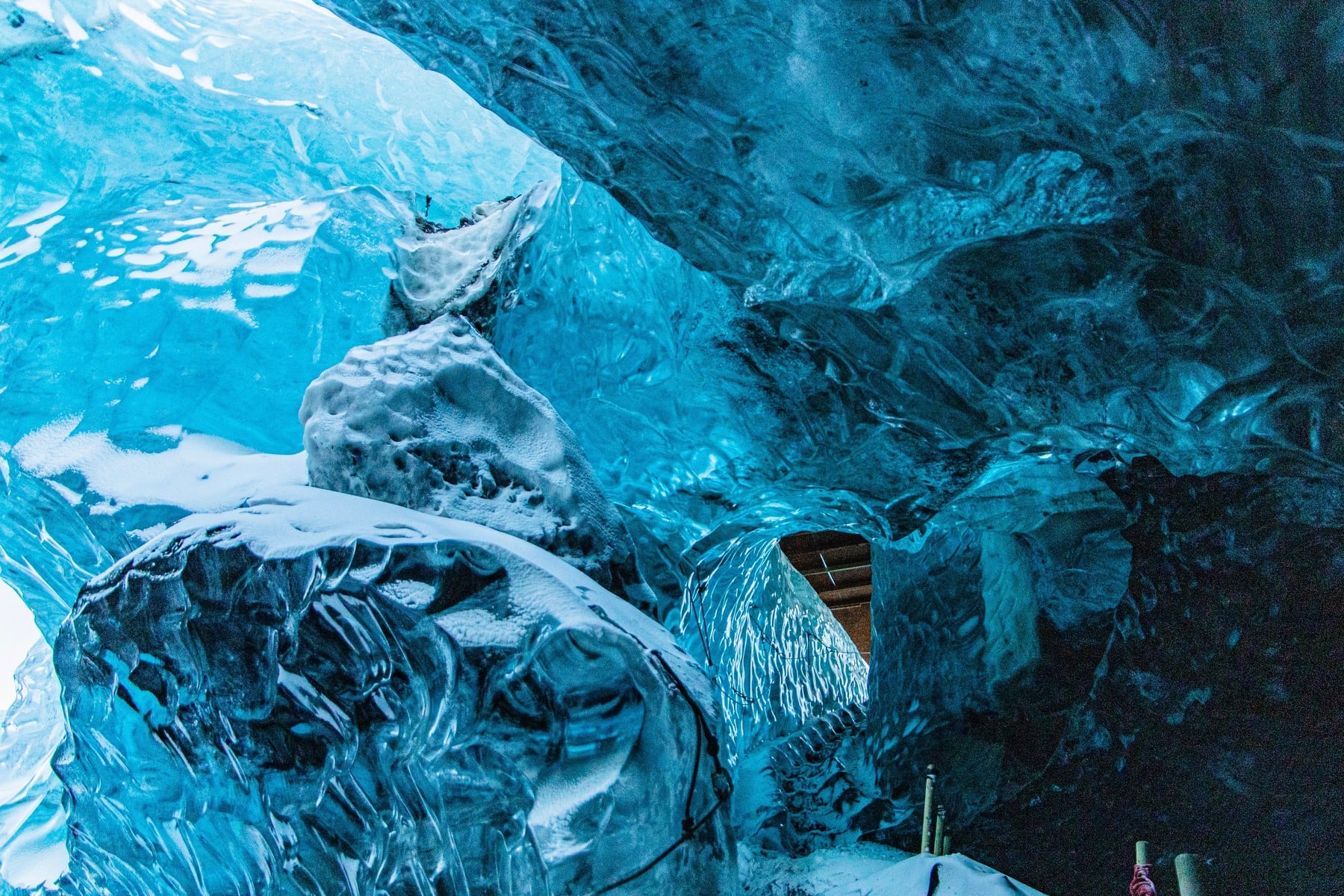
Scientists believe Ganymede, Jupiter's largest moon, contains more liquid water than all the water on Earth's surface combined, yet this reservoir is buried beneath an ice shell roughly 150 kilometers thick. The ocean itself may be about 100 kilometers deep, wrapped around a world larger than Mercury, but no spacecraft has drilled through the ice or directly observed the liquid. The European Space Agency's JUICE mission, scheduled to reach Jupiter in 2031 and orbit Ganymede in 2034, will test the theory using magnetometers, gravity measurements, and ice-penetrating radar.
The evidence for Ganymede's ocean comes from magnetic behavior rather than visual observation. NASA's Galileo spacecraft detected an induced magnetic field consistent with a conducting layer of salt water responding to Jupiter's changing magnetic environment. Hubble observations in 2015 found that auroral bands near Ganymede's poles moved only about two degrees as Jupiter's field changed, rather than the six degrees expected without an ocean. The induced magnetic field from a salty ocean appears to dampen the auroral motion, strengthening the case for hidden liquid.
The 150-kilometer ice thickness is not a measured boundary but an estimate from models combining magnetic, thermal, and density data. NASA's Juno spacecraft placed an upper bound of about 150 kilometers on the conducting part of the ice shell during a 2021 flyby using microwave radiometer measurements. The structure may be more complex than a simple ice roof over liquid water, with some models suggesting high-pressure ice layers below the ocean that could prevent the water from directly contacting Ganymede's rocky mantle.
Surface clues hint at possible exchange between the ocean and exterior, but none confirm a current connection. Juno's infrared spectrometer detected hydrated sodium chloride, ammonium chloride, and possible organic compounds concentrated in regions partly shielded from Jupiter's radiation. Researchers interpreted these salts as possible remnants of subsurface brines, though they could have originated from shallow pockets or ancient periods when the ice was thinner. Water vapor detected by Hubble in 2021 appears to come from surface ice sublimating in sunlight, not from ocean plumes like those at Saturn's moon Enceladus. JUICE will map Ganymede's surface composition and gravity over many orbits, seeking evidence of whether ocean material has reached the surface through impacts, tectonics, or slow upward migration through warm ice.