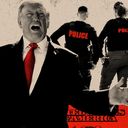
The Trump administration has threatened local and state election officials with arrest and is withholding millions of dollars in federal police and anti-terrorism funding from jurisdictions that refuse to implement new voting rules, according to legal challenges filed across the country.
The White House is conditioning federal grants for public safety and counterterrorism programs on adoption of specific voting procedures. By linking law enforcement funding to election policy compliance, the administration is forcing officials to choose between maintaining police operations and preserving their current election administration practices.
Harris County, Texas Attorney Abbie Kamin characterized the effort as an attempt to defund public safety and counterterrorism programs. The controversial voting rules the Trump administration is demanding include transitioning to paper ballots and implementing proof of citizenship requirements.
Two lawsuits have been filed by state and local governments accusing the administration of unconstitutionally imposing election policies that Congress has not approved. Officials argue the administration lacks authority to unilaterally attach voting requirements as conditions for law enforcement funding, marking an escalation in federal-state tensions over election administration.
Private voting rights attorneys and Democratic attorneys general are mobilizing to defend election officials and prepare additional legal challenges against the federal government. These legal strategies represent a significant conflict between the federal government and local jurisdictions over the proper scope of federal power.
The funding restrictions represent a dramatic shift in how federal money is being deployed. Rather than simply proposing new election policies through Congress, the Trump administration is using federal dollars as leverage to advance voting procedures at the state and local level. Affected jurisdictions have resisted what they view as an inappropriate use of federal spending power to circumvent the legislative process.
The disputes are emerging as a significant flashpoint, with both parties preparing for potential legal battles over election procedures in multiple states. Legal experts involved in the cases argue that conditioning federal law enforcement funding on election policy compliance exceeds the administration's constitutional authority and represents an improper use of federal spending power.
Officials in affected jurisdictions say the move essentially blackmails them into choosing between public safety funding and their current election practices. Local governments across the country that have refused to comply with the administration's voting requirements are facing the prospect of losing substantial federal police and anti-terrorism grants.
The conflict highlights growing tensions between the Trump administration's election policy ambitions and its constitutional authority to implement those policies. By withholding federal funding rather than pursuing congressional legislation, the administration is attempting an alternative pathway to achieve voting changes that have faced resistance through traditional legislative channels.