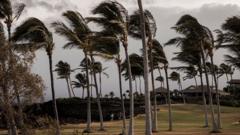
Tropical Storm Lala is bringing hurricane-force conditions to Hawaii's Big Island with dangerous winds, heavy rainfall and high surf. The storm was located approximately 420 miles southeast of Hilo and was forecast to strengthen into a hurricane as it approached the islands.
The National Oceanic and Atmospheric Administration reported that Lala was packing winds of 60 mph as it moved toward the archipelago. Hurricane warnings have been issued for Hawaii county, which includes the Big Island, while tropical storm warnings cover Maui, Molokai and Kahoolawe.
Forecasters predict significant rainfall across the islands, with 8 to 12 inches expected on Maui and the Big Island. Some areas could see up to 25 inches. A storm surge of 1 to 3 feet is also forecast as the storm reaches shore. NOAA's Weather Prediction Center warned that Hawaii "faces life-threatening flash floods and mudslides as Tropical Storm Lala approaches."
Governor Josh Green declared a state of emergency, stating that Lala poses a serious threat to the state, particularly Hawaii Island. "Our state and county emergency teams are coordinating closely with federal partners," Green said. "I urge everyone to secure their homes, gather essential supplies, review their family emergency plans and follow updates from trusted official sources."
Hawaii county Mayor Kimo Alameda urged residents to prepare immediately for possible damaging winds, flooding rain, high surf, power outages, loss of communications and road closures. Residents have been advised to clear gutters and drains, move valuables off the ground, seal gaps in doors and remove tree limbs that could threaten their properties. Officials also warned people to stay away from beaches and coastal areas where rough surf and rip currents pose dangers.
If Lala's center passes over the Big Island, it will mark the first direct hit by a tropical cyclone there since Tropical Storm Darby in 2016. The last major hurricane to strike Hawaii was Hurricane Iniki in 1992, which caused at least six deaths and billions of dollars in damage.
The storm's approach coincides with a powerful El Niño forming in the central equatorial Pacific Ocean. The NOAA predicts a 69 percent chance of a historic El Niño event that would exceed the strength of previous events dating back to 1950 when it peaks between October and December. El Niño conditions typically promote hurricane activity in the Pacific while suppressing it in the Atlantic.
Hawaii Volcanoes National Park closed access to Mauna Loa's summit on Thursday afternoon, with plans to close the welcome center, trails and the Nahuku lava tube during the storm.