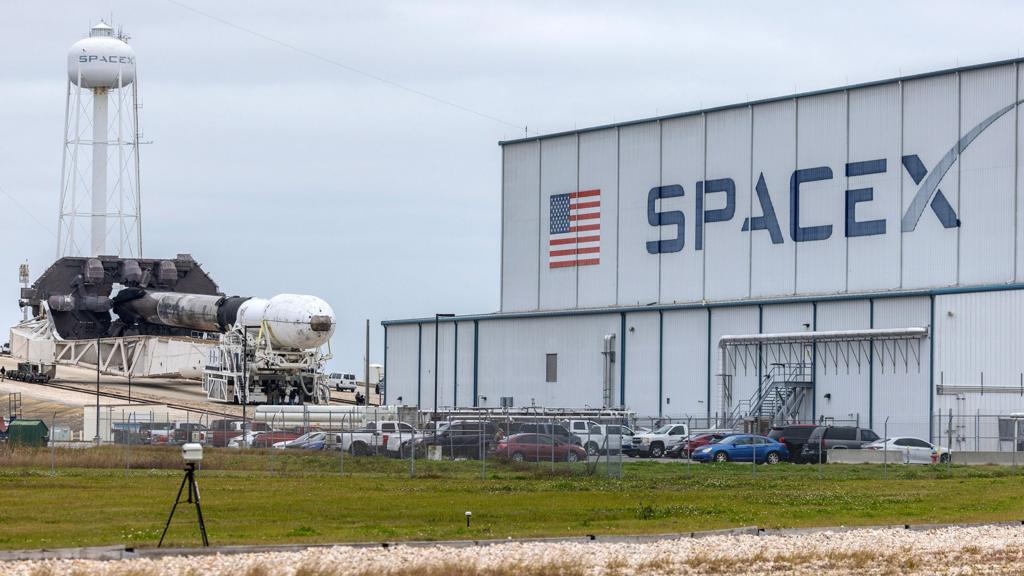
A four-ton piece of a SpaceX Falcon 9 rocket has crashed into the moon's surface at approximately 8,700 kilometers per hour in an unintentional collision that poses no danger to Earth. The rocket stage, which had been drifting in space since January 2025, struck the lunar surface on Wednesday as astronomers had predicted.
The object was part of a Falcon 9 rocket that launched a lunar lander for US company Firefly Aerospace toward the moon in January 2025. Because the lunar mission required more thrust than typical Earth-orbit operations, the rocket's second stage remained in space rather than falling back to Earth's atmosphere. The stage then became space junk among thousands of other debris pieces that satellites must avoid.
According to Julianna Scheiman, SpaceX's director of NASA science and Dragon programmes, the collision resulted from orbital mechanics. "What has happened is essentially a mixture of solar activity and gravity forces have put it on a path toward the moon," she said.
NASA estimated the impact would create a crater approximately 60 feet wide and 12 feet deep, ejecting dust and rock across the lunar surface. The space agency announced plans to observe the impact site before and after the collision to collect data. A NASA spokesperson said the agency would use this information to "better understand artificial impacts and their exploration implications" and to "refine techniques for tracking objects in space."
Professional and amateur astronomers using high-quality telescopes initially struggled to confirm the impact, possibly because the impact site was located near the moon's visible edges. The dust plume, while expected to stretch for miles, would be difficult to observe with the naked eye from Earth.
Lunar impacts from human-made objects remain rare. A Chinese rocket stage crashed into the moon in March 2022 after completing a lunar test mission. NASA intentionally crashed a rocket stage into the moon in 2009 to study the resulting dust plume. Several spacecraft intended to land softly on the moon have crashed in recent years, including Russia's Luna-25 mission in 2023 and India's Chandrayaan-2 lander in 2019.
Bill Gray, creator of widely used astronomy software who published a report on the stage's trajectory in April, noted the incident's limited scientific value. "This may be of some, probably minor, scientific interest, and we may learn some things from it. It doesn't present any danger to anyone, though it does highlight a certain carelessness about how leftover space hardware is disposed of," he said.
NASA and SpaceX are now discussing methods to prevent similar unintentional lunar impacts in the future. The incident underscores growing concerns about space debris management as launch activity increases globally.