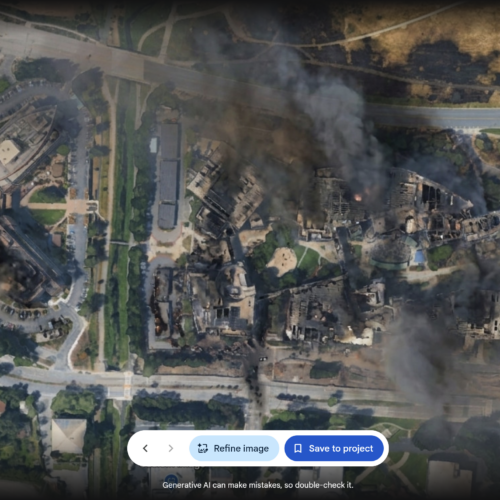
Alphabet has shut down an artificial intelligence image generation tool in Google Earth just one day after its launch, following swift backlash over misinformation concerns. The feature allowed users to generate synthetic satellite imagery by entering text prompts, raising immediate alarm about its potential for abuse.
The tool worked by letting users edit satellite, aerial, and 3D imagery from Google Earth using AI, essentially enabling the creation of deepfakes of real-world locations. Researchers and journalists quickly demonstrated how easily the feature could be misused. Digital Digging's Henk van Ess generated images showing fabricated scenes such as refugees near the Mexican border and a bomb crater near a hospital in Gaza. These examples illustrated how convincingly the AI could create false imagery that appeared authentic.
The rapid removal came after widespread criticism from observers who warned that such a tool could be weaponized to spread misinformation on a large scale. Tech journalists and security researchers highlighted the dangers of combining AI image generation with real geographic data, showing how the feature could be used to create false evidence of events or conditions at specific locations.
Google's decision to pull the feature reflects growing tensions in the technology industry around deploying generative AI tools responsibly. The company has not announced plans to reintroduce the feature with additional safeguards or confirmed whether the removal is permanent.
This incident is part of a broader pattern of AI companies facing pushback over generative tools. Grammarly, for example, recently disabled its Expert Review feature after backlash and a lawsuit. That tool used AI to generate writing feedback supposedly inspired by prominent figures including Stephen King and Neil deGrasse Tyson, without their consent. The company apologized and said it would redesign the feature, though it denied the lawsuit's claims had merit.
The similarities between these cases reveal common challenges technology companies encounter when deploying AI at scale. Features designed to enhance user experience can quickly become vectors for misuse if not carefully managed. The speed at which Google responded to the Earth feature criticism suggests the company recognized these risks immediately.
Google Earth itself remains an important resource used by millions worldwide for viewing maps, satellite imagery, and terrain data. Researchers, educators, and the general public rely on the platform for geographic information. The attempted integration of AI image generation represented an expansion of these capabilities, but also introduced significant risks to content authenticity.
The incident underscores how the gap between AI capability and responsible deployment continues to challenge the technology sector. As generative AI becomes more sophisticated, distinguishing authentic content from fabricated material grows increasingly difficult, making preemptive safeguards essential before features reach the public.