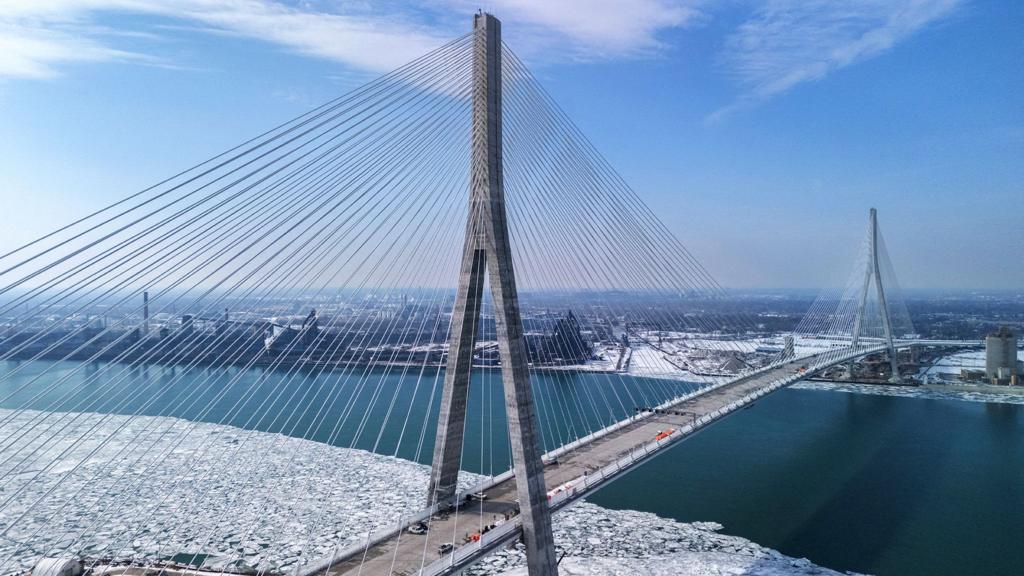
Canada proceeded with opening the Gordie Howe International Bridge connecting Detroit and Windsor on July 27, but the celebration reflected deeper rifts between the two countries. A planned joint ceremony between US and Canadian officials was cancelled after President Donald Trump announced a 50 percent tariff on most Canadian goods, accusing Canada of unfairly discriminating against American automobiles, alcohol, and dairy products.
"In light of trade action threatened by the United States earlier this week, it would be inappropriate to proceed with a celebratory event between the two countries," said Jenna Ghassabeh, a spokesperson for Canada's infrastructure minister Gregor Robertson. Canada moved forward with its own ceremony on July 24, while it remained unclear whether the United States would hold a separate celebration.
The 1.5-mile bridge spans the Detroit River and represents a major infrastructure project that took more than six years to complete. The bridge is named after hockey legend Gordie Howe, who played 25 seasons with the Detroit Red Wings. The project cost nearly $4.4 billion and was financed by Canada under an agreement allowing it to recover costs through toll revenue.
The opening marked the conclusion of a contentious negotiation process. An initial ribbon-cutting scheduled for June was abruptly postponed after US and Canadian officials said they were still resolving "outstanding issues." On July 10, after months of dispute, the two countries announced a deal that cleared the way for the July 27 opening.
Central to the dispute was how toll revenues would be shared. Under the agreement reached, Canada will share 50 percent of net bridge and crossing-related revenues with an economic development fund controlled by the US government. This arrangement appeared to contradict statements made by Canadian Prime Minister Mark Carney, who had previously said toll revenues would not be split until Canada was repaid for construction costs. Carney's government initially kept the agreement terms secret before releasing them to address criticism from opposition lawmakers.
The Trump administration had pushed for changes to the original financing arrangement. In February, Trump demanded that the US government receive at least half ownership of the bridge, alongside other unspecified demands. Some observers alleged the administration delayed the opening to protect interests of Matthew Moroun, owner of the nearby Ambassador Bridge and a Trump donor.
The new bridge provides a third crossing option between Michigan and Ontario, supplementing the existing Ambassador Bridge and Detroit-Windsor Tunnel. The corridor represents one of North America's busiest commercial border crossings.
Despite the cancelled joint ceremony, both countries indicated their commitment to the bridge's opening. US officials said they expected the crossing to open on schedule, though uncertainty surrounded whether a separate American ceremony would occur. Canada's Carney said his government believes in "the benefits of free and fair trade" and remains prepared to negotiate with the Trump administration about the tariffs.