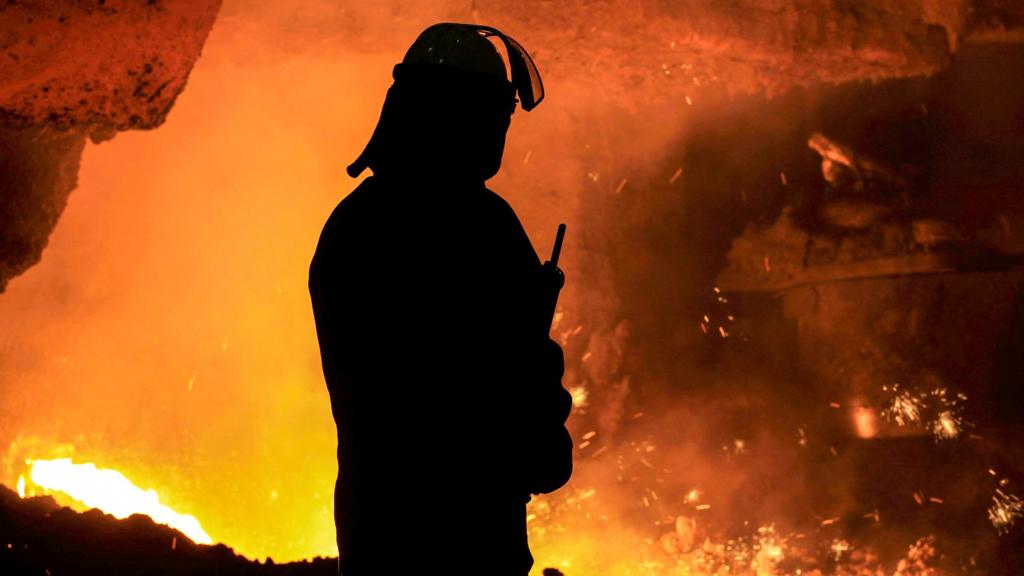
The British government has brought British Steel into public ownership this week, ending Chinese control of the country's last remaining plant that produces virgin steel. The move has triggered strong criticism from China's government and demands for compensation from Jingye Group, the Chinese company that owned the steelmaker.
China's Ministry of Commerce expressed being "strongly dissatisfied" with the nationalization, stating the decision dealt "a severe blow to Chinese companies' confidence in investing in the UK". A ministry spokesperson told Chinese media that the UK government "forcibly took control of British Steel and subsequently nationalised the company in the name of national security, seriously undermining Jingye's legitimate rights and interests". The Chinese government has called on the UK to comply with the bilateral investment treaty between the two countries and treat Chinese companies fairly.
Jingye Group acquired British Steel for approximately 50 million pounds in 2020 after the steelmaker faced insolvency. The nationalization follows an emergency government intervention 15 months earlier, when Jingye threatened to close the Scunthorpe steelworks and eliminate 4,000 jobs. At that time, the Labour government recalled parliament to prevent the closure.
The UK government justified the takeover as necessary to protect what it called a vital domestic capability and to maintain steel production capacity at the Scunthorpe facility in Lincolnshire. Prime Minister Keir Starmer confirmed the nationalization on Thursday, stating: "British Steel is part of the fabric of our nation and a cornerstone of Britain's industrial strength. Today's decision secures the future of steelmaking in the UK, protects skilled jobs and safeguards a vital national capability."
The nationalization became possible following the Steel Industry (Nationalisation) Act 2026 receiving royal assent. This new law grants ministers authority to transfer steel businesses' shares or property into public ownership. Following the takeover, the government appointed a new leadership team focused on stabilizing the business and developing it into a "commercially sustainable, low-carbon enterprise".
The UK government has appointed an independent valuer to determine appropriate compensation for Jingye, an effort to prevent legal action under international investment treaties. Jingye has claimed in its UK accounts and social media statements that British Steel represents a valuable asset deserving substantial compensation, despite the company's earlier threat to allow it to fail.
The dispute marks the latest geopolitical tension between the UK and China. Previous disagreements include the government's decision to remove Huawei equipment from Britain's 5G networks in 2020 and the removal of China General Nuclear from the Sizewell C nuclear project in 2021 over security concerns. The nationalization decision could affect broader UK-China business relations and future foreign investment in Britain.