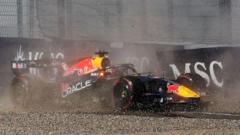
Red Bull Racing will revert to a conventional rear wing design for the Belgian Grand Prix following high-speed crashes involving Max Verstappen in the previous two races. The technical change represents a significant shift in the team's aerodynamic approach as it addresses concerns about stability.
The consecutive incidents prompted Red Bull's engineering team to reassess its current rear wing configuration. The team concluded that reverting to a more traditional wing setup would provide greater reliability and restore driver confidence in the car's behavior under racing conditions.
The Belgian Grand Prix at Spa-Francorchamps presents particular challenges due to the circuit's demanding high-speed corners. The track's nature means aerodynamic stability becomes crucial for both performance and safety. Managing downforce carefully through sections like Eau Rouge and Blanchimont requires precise balance. Red Bull's decision to switch wing designs suggests the team is prioritizing stability and consistency over the potential performance advantages of its experimental configuration.
The timing of this change matters significantly during the championship season. Verstappen has established himself as a dominant force in Formula 1 in recent years, and any technical adjustment could influence Red Bull's competitive standing. The team must ensure the conventional wing delivers sufficient performance to maintain their championship challenge while eliminating the risk factors that caused the recent accidents.
Red Bull has not provided specific details about what caused problems with the previous wing design or the exact circumstances of Verstappen's crashes. The team plans to evaluate the revised configuration during practice sessions at Spa before committing to it for qualifying and the race. How the wing change affects Red Bull's performance advantage will likely draw close attention from rival teams.
The decision comes as Red Bull has shown significant progress through recent races. Following upgrades at the Austrian Grand Prix, Verstappen finished second behind Mercedes' George Russell, demonstrating improved form despite experiencing a technical issue at the rear of the car during that race. Team principal Laurent Mekies expressed satisfaction with the team's trajectory, noting they had narrowed the gap to competitive rivals from more than a second away from winning pace at the season's start to within striking distance.
However, Verstappen has raised concerns about upcoming races under current Formula 1 regulations. After simulator work ahead of the British Grand Prix, he expressed skepticism about how the new engine formula would affect Silverstone's performance characteristics. The current regulations emphasize energy management with a roughly equal split between internal combustion engine power and the electrical battery and hybrid unit, which Verstappen and other drivers have criticized.
Despite these challenges, Lewis Hamilton acknowledged Red Bull's progress, highlighting how significantly the team had reduced the car's weight and developed strong upgrades. Mercedes, meanwhile, has demonstrated particular strength this season in energy recharging and electrical power deployment, suggesting they will be formidable competitors at Silverstone and beyond.