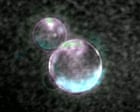
Researchers have created synthetic cells that can perform fundamental life functions, marking what experts describe as a major breakthrough in artificial biology. The tiny structures, called SpudCells, use lab-made DNA to feed, grow, and multiply in controlled laboratory conditions.
The synthetic cells were constructed from chemical compounds and represent the first known example of artificially created cells that complete a full life cycle, including growth, genetic copying, and division to produce new generations. The work was led by Dr Kate Adamala at the University of Minnesota.
SpudCells begin as miniature water-filled spheres called liposomes, each just a few thousandths of a millimeter wide. Researchers added synthetic DNA to provide basic functions. The cells survive in a nutrient-rich liquid containing essential chemicals like ATP, which supplies energy. To grow, SpudCells fuse with smaller "feeder" liposomes that contain molecules, enzymes, and ribosomes needed for protein production. The synthetic DNA carries instructions for copying the genome and dividing into daughter cells.
The researchers demonstrated that SpudCells with genetic advantages can outcompete others, mimicking natural selection. However, the synthetic cells remain far simpler than natural organisms. They cannot manufacture their own protein-making machinery, regulate their own metabolism, or manage waste. They depend entirely on the surrounding liquid for survival and typically fail after a few generations because they often pass incorrect amounts of DNA to offspring.
Adamala emphasized the significance of the achievement while acknowledging limitations. "It is not as robust, as fast, or as good at most of its functions as a natural cell," she said, "but it is proof of principle that molecules can reconstitute behaviours that up until now we only associated with natural living cells."
The breakthrough could enable the creation of artificial organisms designed to produce drugs, food, fuel, and other materials. Beyond practical applications, the work addresses fundamental questions about what constitutes life and how living systems might have emerged from non-living chemistry.
Professor Tom Ellis from Imperial College London called the work "probably the field's biggest breakthrough in recent times," noting it helps establish the minimum requirements for life and provides a fully understood system for testing biological models.
Adamala and collaborators, including Stanford bioengineer Professor Drew Endy, are establishing an institution called Biotic to advance synthetic cell research. Their goal is to develop what Endy describes as "an operating system for life" built from genes and biochemistry.
Some scientists have raised questions about the approach. Philosopher John Dupré from the University of Exeter suggested synthetic cells may have limited value compared to modified bacteria and questioned whether they truly illuminate the nature of life, particularly regarding the symbiotic relationships characteristic of natural organisms.