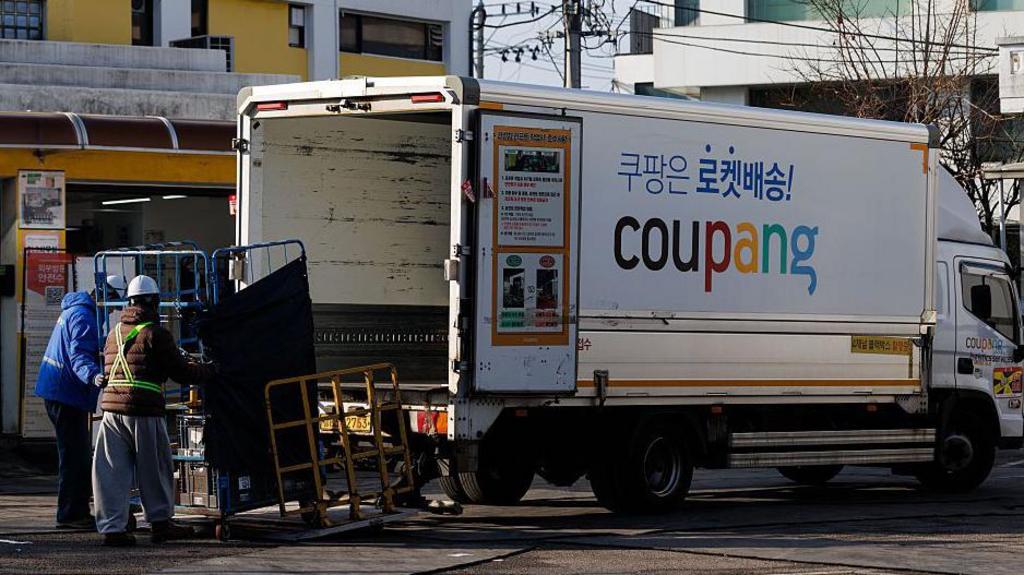
South Korean authorities imposed a record-breaking fine exceeding $400 million on Coupang following a data breach that compromised information from 33.7 million users. The penalty marks the largest enforcement action of its kind in the country, but the case has escalated beyond a simple regulatory matter into a diplomatic dispute affecting broader US-Korea relations.
Coupang, often described as South Korea's answer to Amazon, is a US-incorporated company headquartered in Seattle and listed on the New York Stock Exchange. The company is run by Korean-American billionaire Bom Kim and conducts most of its business in South Korea, operating e-commerce, grocery delivery, and other services.
In November, Coupang disclosed that a former employee had stolen an internal security key, allowing unauthorized access to millions of customer accounts. The revelation triggered a public backlash and aggressive government action. South Korean police raided the company's Seoul headquarters, tax authorities launched a special audit, and parliament summoned executives for questioning.
The diplomatic complications emerged when Kim refused to travel to Korea for parliamentary hearings, citing his role as a global chief executive. South Korean police then requested that immigration authorities notify them if he entered the country. According to Korean broadcaster SBS, Washington signaled it would not proceed with planned high-level diplomatic and defense consultations unless South Korea guaranteed Kim would face no legal consequences related to the breach.
South Korea's foreign ministry declined to confirm the report but stated that security discussions should remain separate from the Coupang matter and that investigations would continue under Korean law. The US embassy refused to comment.
The dispute has affected other bilateral discussions, including talks on US support for South Korea's nuclear-powered submarine development, with reports indicating that a scheduled US delegation visit was postponed.
Coupang has significantly increased its lobbying efforts in Washington. The company spent over $3 million lobbying the US government in 2025, bringing its total spending since 2021 to more than $11 million. In the first quarter of 2026, Coupang doubled its Washington lobbying compared to the same period in 2025.
In January, Vice President JD Vance raised the Coupang issue when South Korea's prime minister visited Washington, expressing hope for a "fair" resolution. That same month, 54 Republican members of Congress wrote to South Korea's ambassador accusing Seoul of "discriminatory actions" against US companies.
Five US investment firms holding Coupang shares filed notices of intent to pursue arbitration against South Korea under the US-Korea free trade agreement, claiming the enforcement response was disproportionate compared to similar cases involving Korean companies.
According to Jaechun Kim, a professor of international relations at Sogang University, the Trump administration's approach to blending economic and security issues creates risk that disputes like Coupang could expand into areas previously separate from retaliation, including defense cooperation agreements.