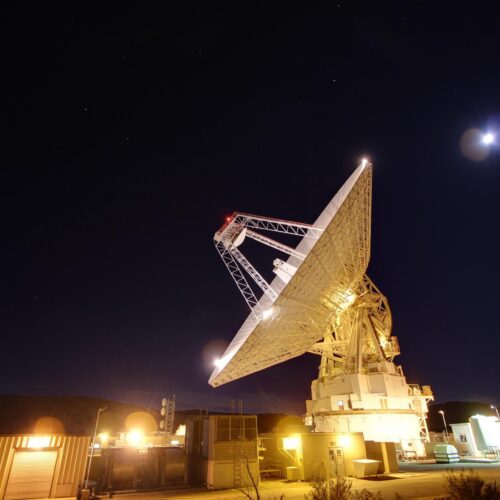
NASA's Deep Space Network successfully supported the Artemis II mission despite operating near capacity limits, according to agency officials. The network, which provides communications and tracking for deep space missions, performed well during the crewed lunar flyby that took place in April.
The strain on the network stems from growing demand across multiple missions. Officials noted that some missions are consuming more bandwidth and resources than their initial documentation indicated. This discrepancy has put pressure on the aging infrastructure, which must support an expanding portfolio of lunar, Mars, and deep space exploration programs.
The Deep Space Network consists of three antenna complexes positioned around the globe in California, Spain, and Australia. This arrangement allows continuous communication with spacecraft as Earth rotates. The network has been a backbone of space exploration since the 1960s, but faces increasing demands from both NASA missions and international partners.
The Artemis II mission marked a significant achievement for the space program. The spacecraft carried astronauts around the moon in a test flight for NASA's Space Launch System rocket and Orion crew capsule. Reliable communication throughout the mission was essential for crew safety and mission success.
Looking ahead, NASA faces even greater communication demands. The agency has announced the Artemis III crew, scheduled to launch in 2027. This all-male crew of four includes Italian astronaut Luca Parmitano of the European Space Agency as pilot, along with American astronauts Randy Bresnik, Frank Rubio, and Andre Douglas. Bresnik serves as mission commander and is a former commander of the International Space Station.
Unlike Artemis II, the Artemis III mission will remain in lower Earth orbit rather than traveling to the moon. The crew will test docking procedures and life support systems for lunar landers from Blue Origin and SpaceX. These tests will prepare for Artemis IV in 2028, which is scheduled to achieve the first crewed lunar landing since 1972.
NASA has been working to upgrade the Deep Space Network to handle these future demands. The agency plans to add new antennas and improve existing equipment to support the Artemis program's long-term goals, including establishing a sustained presence on the Moon and eventual human missions to Mars.
NASA Administrator Jared Isaacman described the growing constellation of spacecraft needed for upcoming missions as "Earth's first starfleet." Multiple vehicles including Dragon, Soyuz, Starliner, Starship, and Blue Origin landers will eventually operate simultaneously in orbit.
The successful performance during Artemis II, despite the network operating near its limits, demonstrates both the capability of existing infrastructure and the urgent need for planned expansions to support NASA's ambitious exploration agenda.