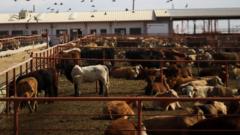
Canada has banned imports of cattle from Texas following the discovery of a flesh-eating parasite in the state. The action came after a second infected calf was identified, prompting Texas to declare a state of disaster.
The New World screwworm fly, which had not been confirmed in the United States since 1966, was found in a calf in south Texas, roughly 50 miles from the Mexico border. The parasite's larvae feed on the blood and flesh of warm-blooded animals, causing severe damage and death if untreated. Female screwworm flies lay eggs in open wounds on livestock, and the larvae quickly consume blood and tissue once they hatch.
For more than a year, the US Department of Agriculture and Texas officials have warned livestock owners about the parasite advancing through Mexico. Despite efforts to contain it, including the release of billions of sterile flies, the screwworm has spread over 1,100 miles from southern Mexico into Texas.
Texas Agriculture Commissioner Sid Miller criticized the federal response in a statement, saying the USDA had missed an important component of its containment strategy. He called for the Trump administration to increase deployment of the screwworm adult suppression system, or Swass, which uses attractants, bait, and targeted insecticides to reduce adult screwworm populations before sterile fly releases complete the eradication effort.
Agriculture Secretary Brooke Rollins defended her agency's response, stating there is no threat of mass infestation and no reason to believe the parasite will become established in the country. She noted that the Texas case was the only confirmed detection in the state so far.
The screwworm was eradicated from the United States in the 1970s after causing tens of millions of dollars in losses. Officials are concerned about a resurgence at a time when beef prices have reached record highs. While the flies pose no direct threat to food safety, officials fear potential shortages if the parasite spreads among cattle and poultry populations.
In response to the outbreak, the USDA has partnered with the Army Corps of Engineers and private construction company Mortenson to build a new sterile fly production facility at Moore Airbase in Edinburg, Texas. This facility will help combat the spread of the parasite.
Texas is a major cattle-producing state, and the livestock industry represents a significant portion of its agricultural economy. The trade restrictions imposed by Canada and the outbreak itself pose potential economic losses for Texas ranchers. The state's disaster declaration allows for faster deployment of resources and personnel to affected areas as officials work to contain the infestation and determine how the parasite reentered the United States.