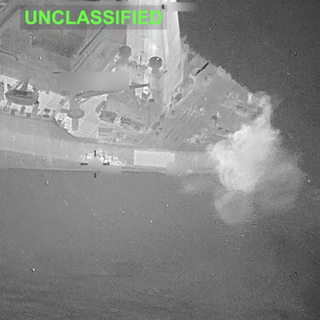
U.S. and Iranian forces exchanged missile and drone strikes on Tuesday as diplomatic negotiations to end their conflict remained deadlocked. The military confrontation raised fresh concerns about whether peace efforts could succeed amid escalating tensions across the Middle East.
U.S. Central Command said American forces intercepted multiple Iranian ballistic missiles and drones before conducting self-defense strikes on Qeshm Island in the Strait of Hormuz. The U.S. military also disabled a tanker attempting to break through an American blockade of the strait. Iranian missiles fired at Kuwait fell short or broke apart during flight, while three missiles launched at Bahrain were intercepted by U.S. and Bahraini air defense forces.
The Iranian foreign ministry condemned the U.S. attacks as "an act of bad faith" and "a definitive violation of the ceasefire," according to reports. The strikes killed four Iranian soldiers. However, Iran's military announced no specific reprisals, suggesting reluctance to disrupt ongoing negotiations. Iran's parliamentary speaker and chief negotiator, Mohammad Bagher Ghalibaf, remained in Doha to continue peace discussions mediated by Pakistan and Qatar.
The proposed ceasefire agreement would end the war but requires resolving several contentious issues. Ghalibaf focused on how more than $12 billion in frozen Iranian assets could be transferred to Iranian accounts. Reports indicate this remains the last serious dispute between Tehran and Washington. Iran also seeks sanctions relief on its oil and petrochemical exports during a 60-day period allocated for negotiating constraints on Iran's nuclear program.
A separate 30-day timeline in the agreement would allow the U.S. to lift its blockade of Iranian oil ports and Iran to allow commercial shipping through the Strait of Hormuz, restoring maritime traffic to pre-war levels. The agreement faces pressure from hardliners on all sides, each demanding their negotiators avoid further concessions.
The Strait of Hormuz remains a critical chokepoint for global energy supplies, making any military activity in the region significant for international markets. Brent oil futures climbed 4 percent following news of the renewed fighting.
Beyond direct U.S.-Iran tensions, Israel's military operations in Lebanon complicated negotiations. Israel issued new evacuation warnings for residents of 19 villages in southern Lebanon as it expanded ground operations deeper into Lebanese territory. Lebanese health officials reported Israeli strikes killed 31 people and wounded 40 in recent hours. Iran's supreme leader, Mojtaba Khamenei, called for unity among Muslim countries and projected confidence despite the escalating conflict.
The timing raised questions about whether negotiations could overcome mounting military pressures. Neither government indicated whether renewed diplomatic efforts were planned following Tuesday's military exchanges.