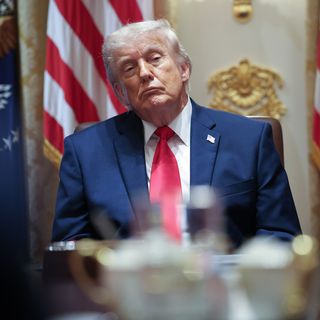
President Trump publicly confirmed Wednesday that he had a heated conversation with Israeli Prime Minister Benjamin Netanyahu, using strong language to express his frustration over Israel's military operations in Lebanon. Trump made the acknowledgment during an appearance on the New York Post podcast hosted by Miranda Devine.
When Devine asked if Trump had called Netanyahu "fucking crazy" and suggested he would face prison without Trump's support, the president responded affirmatively. "I did," Trump said. "I wouldn't say angry. I was a little bit perturbed at his constantly fighting with Lebanon, you know. At some point I said, 'Bibi, we've got to stop this. We gotta stop it.'"
Trump noted that despite the tension, he maintains positive feelings toward Netanyahu and has worked well with him historically. The conversation reflected Trump's effort to curb Israel's intensified military campaign in the region as he seeks to manage broader tensions with Iran.
The call reveals a significant shift in the public relationship between the two leaders. Trump's willingness to confirm the details rather than deny or minimize the report demonstrates his administration's readiness to apply pressure on Israel regarding its military conduct in Lebanon. Trump appears to view his past support for Netanyahu as leverage in current negotiations.
The exchange occurs amid a complex regional situation. Iran had threatened to suspend peace talks with the United States over Israel's offensive actions in Lebanon. Trump, eager to prevent further escalation and secure a path away from direct confrontation with Iran, reportedly used the profanity-laden call to push Netanyahu toward de-escalation.
The death toll in Lebanon has mounted significantly during the conflict with Israel, reaching 1,422 people according to Lebanese health ministry data. In the 24 hours preceding reports of this call, Israeli strikes killed 54 people and wounded 156 others. These figures underscore the intensity of the military operations that prompted Trump's criticism.
The disagreement over Lebanon marks a notable departure from the strong alignment between Trump and Netanyahu during Trump's first presidency. That period saw the U.S. embassy relocated to Jerusalem and the brokering of the Abraham Accords, which normalized relations between Israel and several Arab nations.
Trump's public confirmation of the tense exchange, rather than attempting to suppress or reframe the story, suggests a calculated diplomatic strategy. By acknowledging the call and his criticism, Trump appears to be signaling to regional actors that he is willing to distance himself from Israeli military decisions when necessary. This approach could serve his effort to prevent further escalation with Iran while maintaining the broader U.S.-Israel relationship.