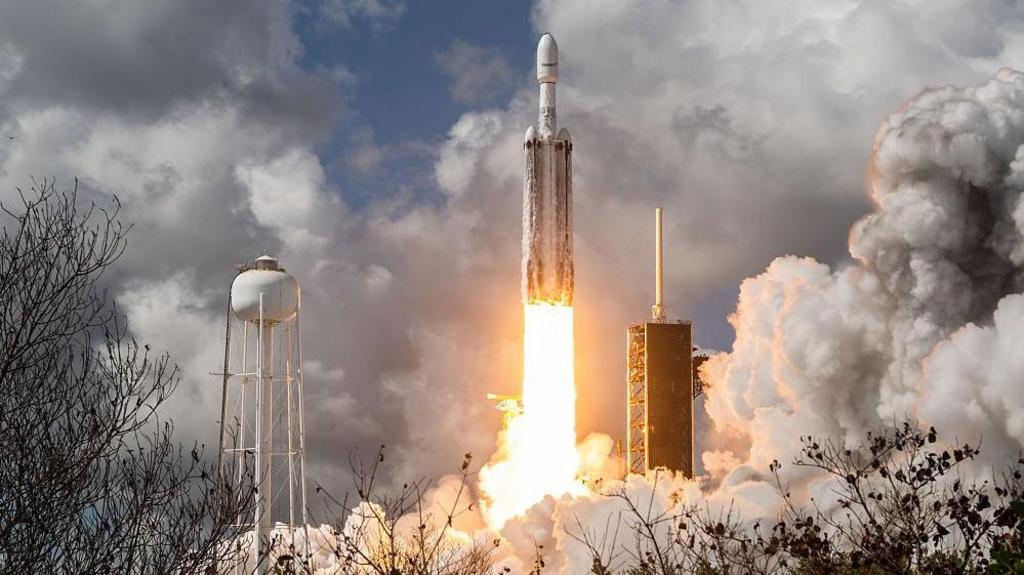
SpaceX plans to raise approximately $75 billion through what would become the largest initial public offering in history. The space exploration company has set a target share price of $135 per share, which would value the company at $1.77 trillion.
The offering would be a historic moment for founder Elon Musk, potentially positioning him to become the world's first trillionaire. According to Forbes, Musk's current net worth stands at $825 billion, with his SpaceX stake valued at $542 billion. Musk is not selling any of his shares in the IPO and would retain 82.4% of the company's voting power.
The company, formally known as Space Exploration Technologies Corp, made the announcement through a securities filing on Wednesday. The roadshow to pitch the company to investors was expected to begin shortly after the filing. JP Morgan Chase boss Jamie Dimon reportedly planned to host a discussion about the IPO for thousands of high net worth clients, joined by SpaceX president Gwynne Shotwell and chief financial officer Bret Johnsen.
Goldman Sachs was selected as the lead underwriter for the offering, alongside Morgan Stanley. Twenty-three banks total are working on the listing, including JP Morgan, Bank of America, and Citigroup.
The IPO would have a significant impact on the broader stock market. Given SpaceX's enormous valuation, it would have substantial weighting in the S&P 500 index, meaning most people with investment accounts or pension funds would be exposed to the company's stock performance. Only six companies in the blue chip index are currently worth more than SpaceX, with semiconductor company Nvidia topping the list at $5.2 trillion.
SpaceX has built a dominant position in commercial spaceflight since its founding in 2002. The company holds major contracts with NASA and the Department of Defense and operates the Starlink satellite internet service, which provides connectivity worldwide. The reusable Falcon 9 rocket has become the workhorse of the commercial launch industry.
The company is also expanding into artificial intelligence, having acquired Musk's xAI to build solar-powered infrastructure supporting AI technology. This move places SpaceX among competitors like Anthropic and OpenAI in the race to scale AI capabilities. The flurry of recent IPOs and fundraising across the tech sector has been widely interpreted as an effort to generate capital for data centers powering AI technology.
The offering comes as the company continues development of its Starship vehicle, designed for missions to the Moon and Mars. The public capital would support these ambitious future projects while providing liquidity for early investors and employees holding stock options.