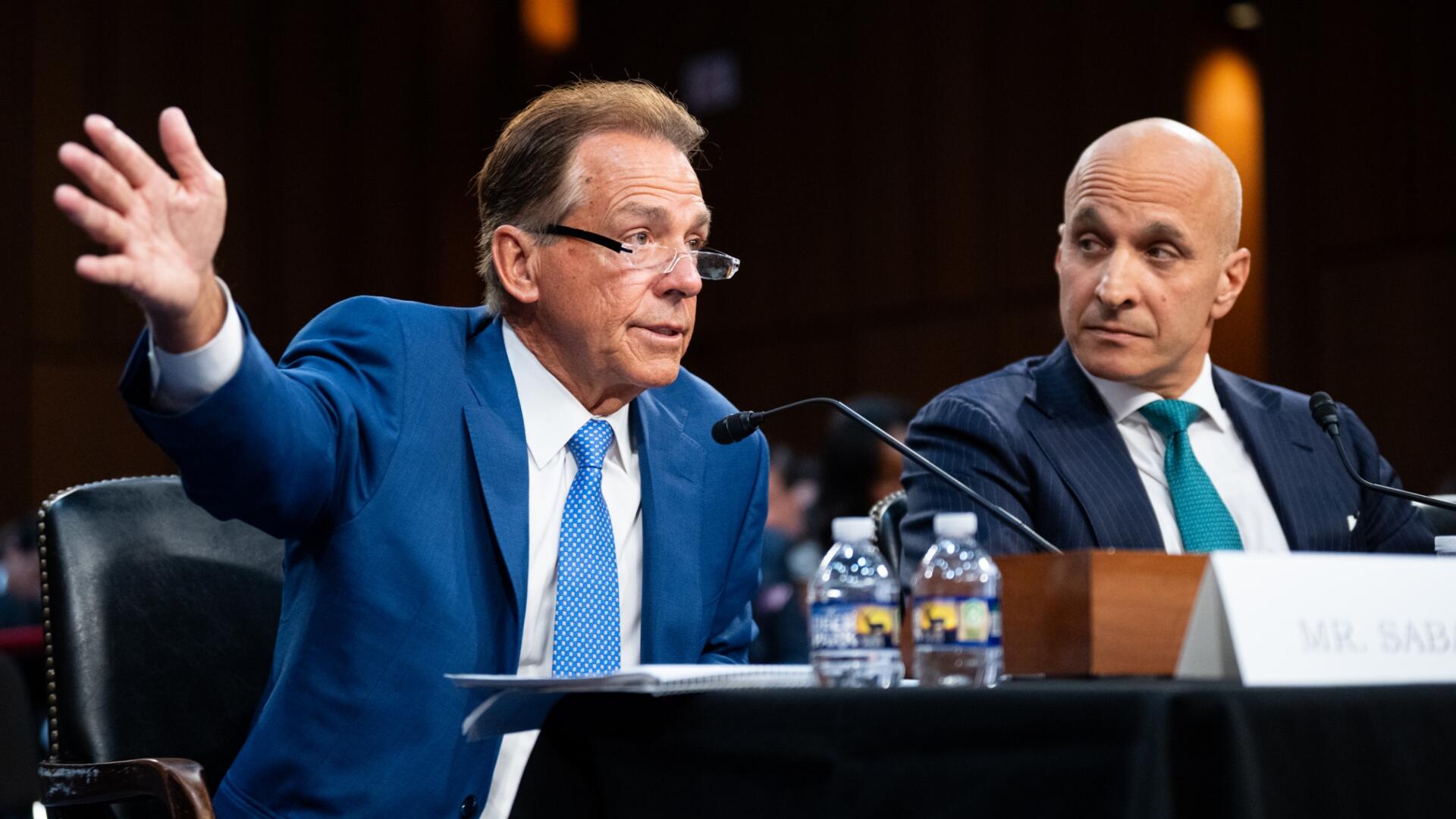
Former Alabama coach Nick Saban testified before the Senate in support of legislation aimed at overhauling college sports, even as the SEC and Big Ten conferences withheld their backing for the proposed reforms. The bill, sponsored by Senators Ted Cruz and Maria Cantwell, seeks to address problems in college athletics including name, image and likeness compensation.
Saban urged the Senate to pass legislation to fix what he characterized as systemic problems in college sports. His testimony included pointed remarks about the current state of college athletics that drew attention from observers. The retired coach, who won multiple national championships during his tenure at Alabama, has emerged as a prominent voice in debates over the future structure of college sports.
The SEC and Big Ten, the two most powerful conferences in college athletics, have declined to support the landmark legislation despite growing calls for reform. Their resistance represents a significant obstacle to passing comprehensive changes to how college sports operate. The conferences have not publicly detailed their specific objections to the proposed legislation.
The push for federal legislation comes amid ongoing uncertainty about how to regulate athlete compensation and the transfer portal in college sports. Since the NCAA began allowing athletes to profit from their name, image and likeness, college athletics has experienced significant upheaval. Advocates for reform argue that federal legislation is necessary to create uniform rules across states and conferences.
Beyond the immediate debate over NIL compensation, the broader college sports landscape faces mounting pressure. Female athletes and Olympic sports participants are increasingly threatened by potential program cuts as universities navigate changing economics. Several college tennis programs have been eliminated recently, though some have survived through donor intervention. Men's tennis participation in Division I has declined from 258 programs in 2010 to 237 in 2025, while other Olympic sports face similar pressures.
University administrators have warned that athletes in non-revenue sports face reduced stipends and scholarship reductions. Even football coaches like Georgia's Kirby Smart have expressed concern about protecting other sports. The worry is that large football programs will seek financial stability by withdrawing resources from women's and Olympic sports programs.
During his testimony, Saban addressed concerns about NIL compensation and its effects on college athletics, though the hearing glossed over questions about coaching contracts and their role in the broader economic structure of college sports. The Cruz-Cantwell bill represents one of several legislative efforts to establish federal oversight of college athletics, but its prospects remain uncertain without support from major conferences that wield considerable influence in college sports.
The challenge ahead involves balancing athlete compensation in football and basketball with the sustainability of less prominent sports that have historically thrived in American colleges.