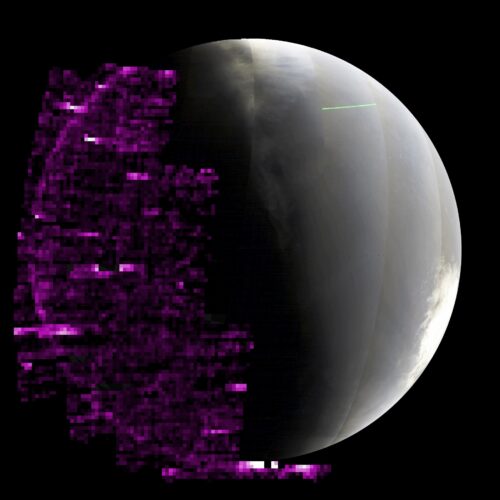
NASA officially concluded the MAVEN mission after the spacecraft spent more than a decade orbiting Mars. The Mars Atmosphere and Volatile Evolution orbiter, which launched in 2013 and arrived at Mars in 2014, stopped communicating with Earth earlier this year. NASA held a media call to formally announce the end of the mission.
Over 11 years, MAVEN studied the Martian atmosphere and investigated how the planet lost much of its air and water over billions of years. The spacecraft was equipped with instruments designed to measure atmospheric composition, track interactions between solar wind and the planet's upper atmosphere, and observe how gases escaped into space. This research helped scientists understand the dramatic transformation of Mars from a potentially habitable world with liquid water on its surface to the cold, dry planet visible today.
The mission team experienced the conclusion with deep emotion. One team member described the loss in personal terms, saying the group felt as though they had lost a loved one when the mission ended. MAVEN significantly exceeded its original planned lifespan, continuing to transmit valuable data for years after its primary mission phase concluded.
The spacecraft fell silent months before NASA announced the official end. Ground controllers lost contact with MAVEN and were unable to restore communication despite repeated attempts. Scientists believe the spacecraft either exhausted its fuel or experienced a critical system failure that prevented it from properly orienting its antenna toward Earth.
MAVEN's contributions fundamentally transformed how scientists understand planetary atmospheres and climate processes on other worlds. The mission provided essential data about how solar radiation and solar wind gradually strip away atmospheric particles, a mechanism that thinned Mars's atmosphere over geological timescales. This understanding has broader implications for studying atmospheric loss on other planets and evaluating the long-term habitability of worlds throughout our solar system and beyond.
The loss of MAVEN reflects the reality of space exploration, where spacecraft eventually reach the end of their operational lives despite the dedication of mission teams. However, the data MAVEN collected during its 11 years in orbit will continue to inform Mars research for decades to come. Scientists will analyze the observations to refine models of planetary atmospheres and improve understanding of how worlds lose their protective air.
MAVEN's legacy demonstrates how sustained observation from orbit can reveal fundamental processes shaping planetary evolution. The spacecraft's instruments captured detailed measurements that ground-based observations and brief orbital passes could never provide. As NASA continues exploring Mars with other missions, MAVEN's findings will serve as a foundation for future discoveries about the red planet's past and its potential for past habitability.