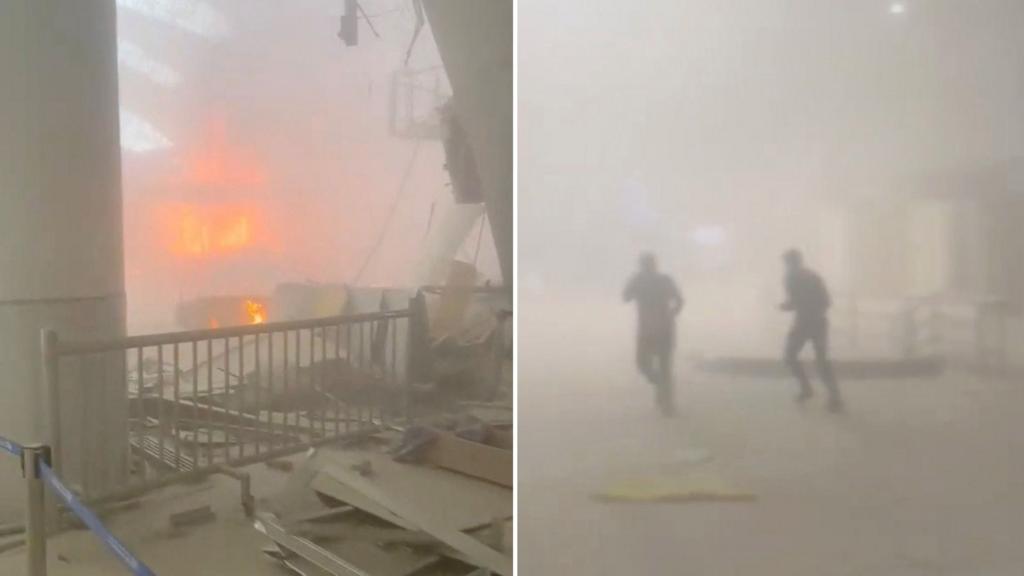
Iranian missile and drone strikes on Kuwait's main airport killed one person and injured 63 others, Kuwaiti authorities reported. The attack occurred as Secretary of State Marco Rubio told lawmakers the Iran war had concluded. Iran also launched strikes on Bahrain on the same day, launching a barrage targeting two Gulf nations that had remained relatively insulated from the broader conflict.
Iran said the strikes were retaliation for earlier US attacks on an Iranian oil tanker and island. The timing of the assault underscored the fragile state of ceasefire negotiations between Washington and Tehran. Hours before the strikes, Rubio had briefed Congress that hostilities had ended, a characterization immediately contradicted by events on the ground.
The airport attack represents a significant escalation in the conflict's geography. Kuwait and Bahrain, both home to US military installations, had not been primary targets in the war between the United States and Iran. The strikes suggest Tehran may be broadening its targeting to include American allies in the Gulf region, raising questions about the durability of any negotiated pause in fighting.
Iranian Foreign Minister Araghchi said there had been no progress in negotiations with the United States. Trump said ceasefire talks were ongoing despite the attacks. The conflicting signals from Washington and Tehran reflect deep uncertainty about whether the parties can reach a sustainable agreement to end hostilities.
The attack on civilian infrastructure at a major international airport marks a departure from previous Iranian strikes, which had primarily focused on military or energy targets. The casualty toll and the targeting of Kuwait, a country that maintained relatively stable relations with Iran compared to other Gulf states, signals a potential widening of the conflict just as diplomatic efforts were said to be advancing.